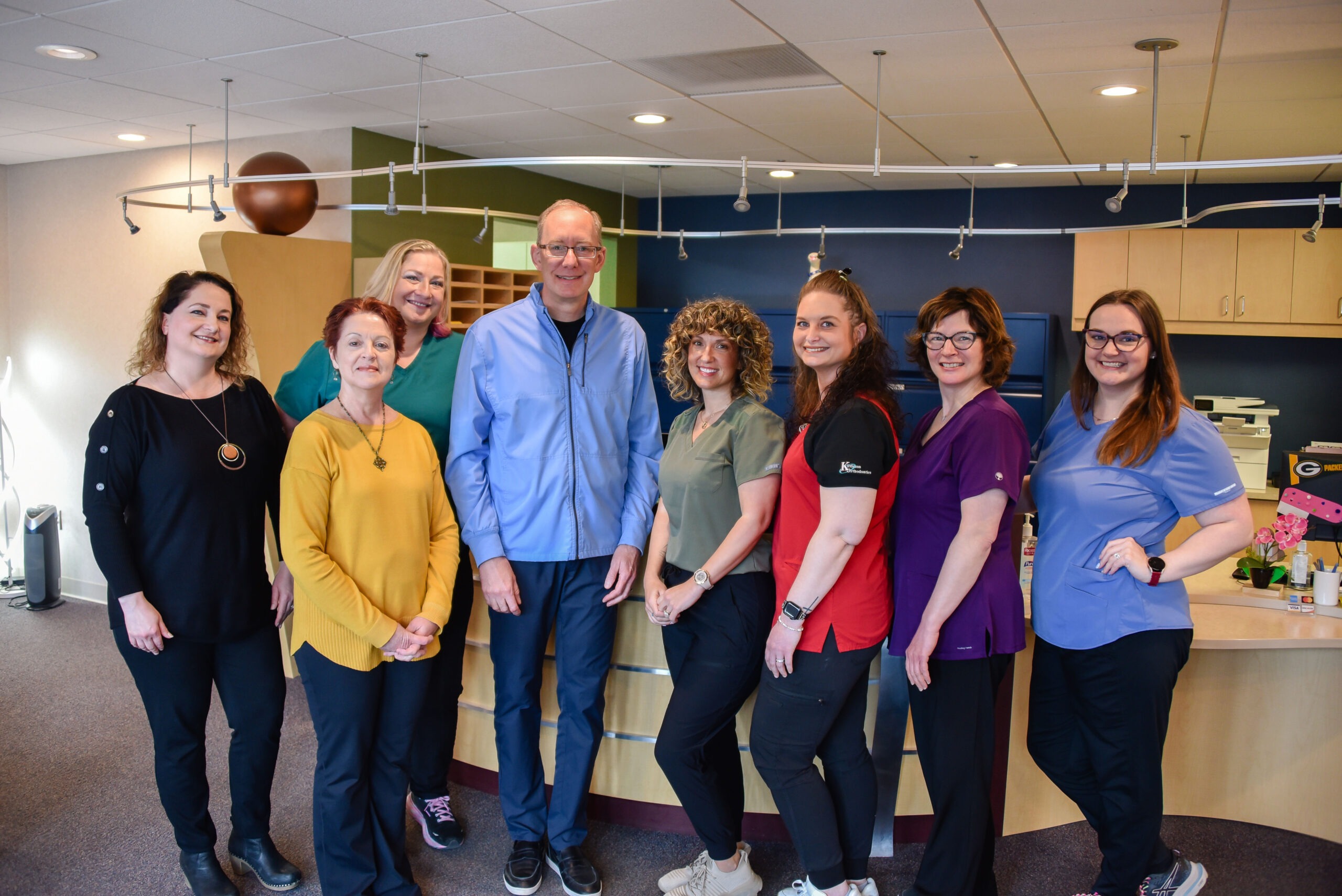
Finding the right Mequon orthodontist for your family is a big decision. You want a smile architect who combines real expertise with a caring approach, someone who treats your kiddos and you like family. This guide walks you through what orthodontists do, how treatment works, and what to look for when choosing a provider you can trust for years to come.
What Is an Orthodontist and What Do They Do?
An orthodontist is a dental specialist who completes two to three years of residency beyond dental school to diagnose and treat misaligned teeth, jaw issues, and bite concerns. This extra education teaches them how to handle everything from crowding to growth-related concerns in younger family members. Choosing a specialist means choosing depth of training that goes well beyond general dentistry.
What does that look like in practice? A specialist fits metal braces, clear braces, and clear aligners. They also use palate expanders and other appliances to guide jaw growth in younger family members. Whether your kiddo has crowding, your teen wants a straighter smile, or you’re an adult finally ready to address that overbite, a specialist has the training to help.
According to the American Association of Orthodontists, orthodontists limit their practice exclusively to orthodontic care, which means they see these cases all day, every day. That focused legacy matters when it comes to getting your smile right. At Kittleson Orthodontics, Dr. John Kittleson brings board-certified specialty training and Diplomate of the American Board of Orthodontics credentials to every family who walks in.
How Orthodontic Treatment Works: The Patient Experience
Orthodontic care follows a clear path from start to finish. The path looks like this:
- Free consult and digital scans: Your first visit involves a thorough evaluation of your teeth, bite, and jaw. Many practices, including Kittleson Orthodontics, use advanced 3D digital scanning technology instead of messy impressions. This gives the team precise images to plan your care.
- Custom care plan: Based on your evaluation, your specialist creates personalized care built around your specific goals. You’ll know exactly what treatment involves and what it will cost before anything starts.
- Active treatment phase: Once you begin, you’ll visit the Mequon office every four to eight weeks for adjustments and progress checks. These visits are usually quick, around 15 to 30 minutes.
- Retainer phase: After your braces come off or you finish your aligners, you’ll wear a retainer to keep your teeth in their new positions. This phase is just as important as active treatment for maintaining your results long-term.
The whole process typically takes 12 to 24 months, depending on your specific needs. Modern digital workflows have made care more comfortable and often more efficient than what your parents experienced.
Benefits of Seeing a Specialist Orthodontist
Why choose a specialist over other options? The benefits add up:
Why Choose a Specialist Over a General Dentist?
Specialists train exclusively in tooth movement and jaw alignment. They’ve handled many cases similar to yours, and that depth of practice matters when results are on the line. Board-certified providers, including those holding the Diplomate of the American Board of Orthodontics designation that Dr. John Kittleson has earned, have demonstrated their expertise through rigorous examination beyond their residency training.
What Treatment Options Will You Have Access To?
From metal braces to clear aligners to early intervention appliances, specialists offer every tool for the job. That range matters because the best appliance for your kiddo may be very different from what works for an adult professional.
A few more reasons families lean toward a specialist:
- Stronger results on demanding cases: Significant crowding, bite issues, or jaw discrepancies need expert hands. Specialists handle these routinely.
- Improved oral health: Straight teeth are easier to clean, lowering the chance of cavities and gum disease.
- Confidence that lasts: A smile you love changes how you feel about yourself. That’s true for kiddos, teens, and adults alike.
- Family-friendly care: Many practices, including Kittleson Orthodontics, treat families together. Your seven-year-old and your teenager can both get care from the same trusted team. Families especially appreciate having one place for everyone.
Orthodontist vs. General Dentist vs. DIY Aligners
Not all orthodontic care is created equal. Here’s how your options compare:
| Factor | Specialist Orthodontist | General Dentist | DIY/Mail-Order Aligners |
|---|---|---|---|
| Training | 2-3 years specialty residency after dental school; often board-certified or Diplomate ABO | Dental school only; may take short courses | No in-person provider |
| In-Person Oversight | Regular visits every 4-8 weeks | Varies by practice | None or virtual only |
| Treatment Scope | All cases, including demanding ones | Limited to mild-moderate cases | Mild cases only |
| Diagnostic Imaging | Full X-rays and scans | Varies | Often limited or none |
| Risk of Issues | Lower due to close monitoring | Moderate | Higher without supervision |
General dentists can handle straightforward cases, but they lack the specialized training for significant bite concerns. DIY aligners skip the in-person diagnosis entirely. Without proper X-rays and examination, underlying issues like root concerns or jaw discrepancies can go undetected. That’s why a board-certified specialist like Dr. John Kittleson begins every plan with a full diagnostic workup before any appliance discussion.
The American Association of Orthodontists recommends in-person evaluation before any orthodontic care. Teeth that look fine on the surface may have hidden issues only a trained specialist can catch.
What Affects the Cost of Orthodontic Treatment?
Orthodontic cost depends on a handful of factors: the complexity of your case, how long care takes, the type of appliance you choose, what’s bundled into the fee, and your insurance benefits. Most practices, including Kittleson Orthodontics, offer flexible payment plans to spread the investment over time, making care accessible for more families. Here’s a closer look at each factor:
- Treatment complexity: Simple spacing concerns cost less than significant crowding or larger bite correction.
- Treatment length: Longer care means more visits and materials.
- Type of appliance: Metal braces are typically the most affordable option. Clear braces and clear aligners often cost more due to materials and technology.
- What’s included: Some practices bundle diagnostic records, retainers, and all visits into one fee. Others charge separately. Ask upfront so you understand the full investment.
- Insurance coverage: Many dental plans cover a portion of orthodontic care, especially for kiddos. Check your benefits before your consult.
- Payment plans: Flexible payment options spread the cost over time, making care accessible for more families.
A free consult lets you understand your specific investment before committing. At your first visit, you should receive a clear breakdown of costs with no surprises.
Who Is a Good Candidate for Orthodontic Treatment?
Orthodontic care works at nearly every age. Here’s who benefits most:
Kiddos (age 7 and up)
The American Association of Orthodontists recommends kids have their first orthodontic evaluation by age seven. At this age, adult teeth are starting to come in and jaw growth patterns become visible. Early evaluation doesn’t mean early care. Often, the team simply monitors growth until the time is right. Many families start with this baseline visit.
Teens
The teenage years remain the most popular time for braces. Most adult teeth have erupted, but the jaw is still growing. This makes it an ideal window for full care.
Adults
It’s never too late. More adults are straightening their teeth than ever before. Clear aligners and clear braces offer discreet options that fit professional and social lives.
Common issues that benefit from care:
- Crowded or overlapping teeth
- Gaps between teeth
- Overbite, underbite, or crossbite
- Teeth that don’t meet properly when you bite down
Before starting, you’ll need healthy teeth and gums. If you have cavities or gum disease, those should be addressed first. Your specialist and general dentist work together to make sure you’re ready.
What to Look for in an Orthodontist
Choosing the right orthodontist comes down to a few key questions. Are they board-certified? Do they treat families of all ages? Is their technology current? Just as important, does the team make you feel welcome from the first phone call?
Take note of how they communicate during your consult. A trusted specialist will explain your options clearly, answer every question, and never rush you toward a decision. Many families also look for a practice that offers transparent pricing and flexible scheduling, since care spans many months.
Frequently Asked Questions
How long does orthodontic treatment take?
Most care plans run between 12 and 24 months. Simpler cases may finish faster, while more demanding bite concerns can take longer. Your specialist will give you a timeline estimate at your consult based on your specific needs.
Does orthodontic treatment hurt?
Some pressure or tenderness can show up after adjustments, but it’s usually mild and fades within a few days. Soft foods and a warm rinse help during adjustment periods. Today’s braces and aligners are gentler and more comfortable than older versions.
Are clear aligners as effective as braces?
For many cases, yes. Clear aligners work well for mild to moderate crowding, spacing, and some bite concerns. More demanding cases may still need braces for the best results. Your specialist will recommend the option that fits your specific situation.
How often are visits needed?
Plan on visits every four to eight weeks during active care. These check-ins let your specialist monitor progress and make adjustments. Most visits are quick, so they fit easily into busy schedules for families on the go.
Can adults get braces or aligners?
Absolutely. Healthy teeth can be moved at any age, and adults make up a growing share of orthodontic families served by Kittleson Orthodontics. Clear aligners and clear braces offer subtle options that many adults prefer.
What happens if I don’t wear my retainer?
Skip your retainer and your teeth will shift back toward their original positions, sometimes within just a few weeks. Wearing your retainer as directed protects the investment you made in your smile.
Choosing the right specialist means finding a team that combines expertise with the kind of attention you’d hope for from a family friend. Look for board-certified credentials like those held by Dr. John Kittleson, ask about the practice’s legacy with cases like yours, and pay attention to how they make you feel during your consult. The right team at Kittleson Orthodontics will make every visit feel less like a chore and more like time spent with people who know your family by name.