Clear aligners look simple from the outside. A smooth plastic tray, no brackets, no wires. What makes them work is everything that happens before the first tray reaches you, and almost all of it happens on a screen. Here is how a scan of your mouth becomes a set of custom aligners, and why the planning matters more than the plastic.
How Your Digital Design Takes Shape
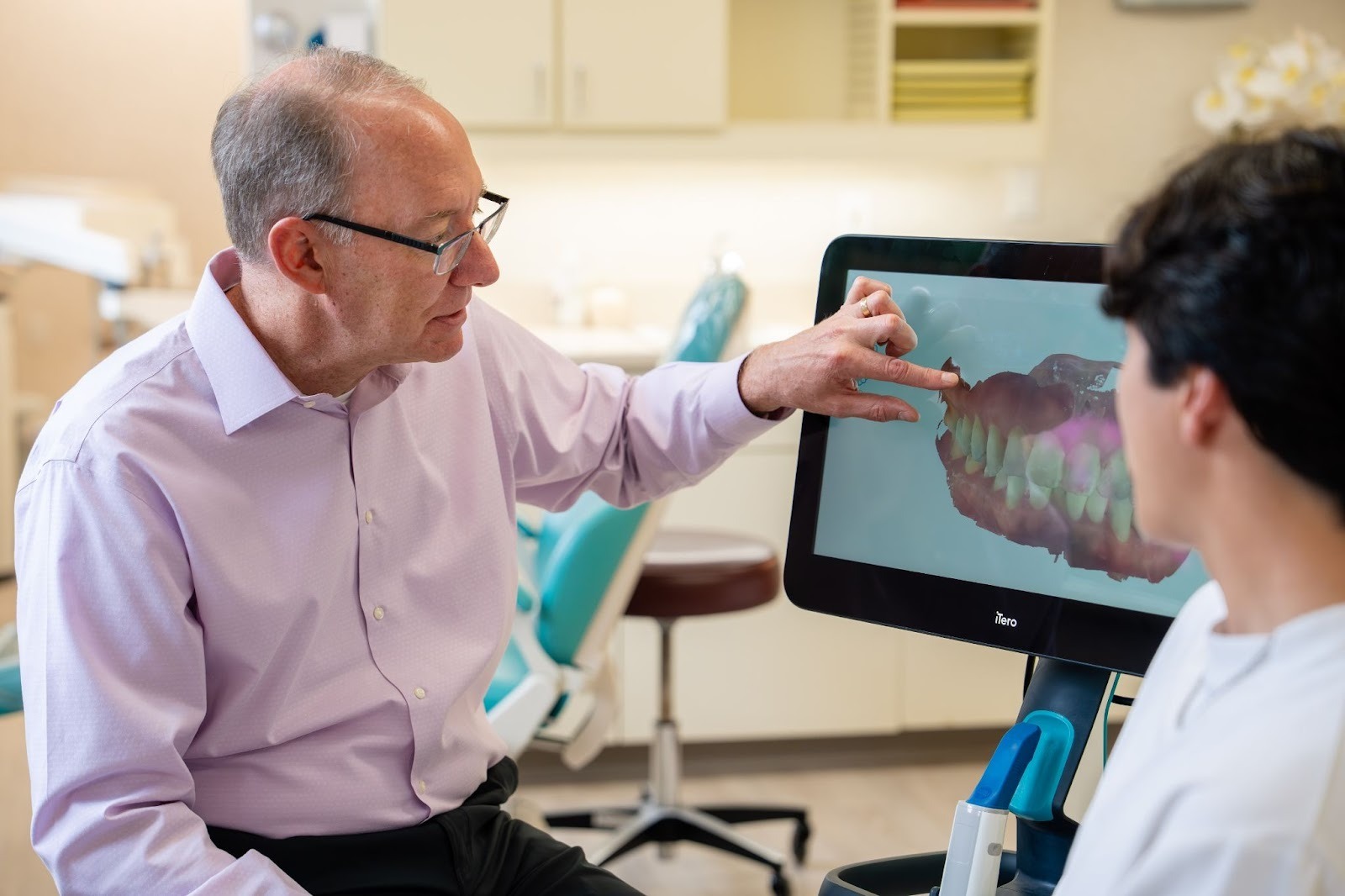
Every SureSmile plan starts with capturing the details. Using the iTero scanner, the team creates a full 3D view of your mouth and builds a digital model in minutes. Watching your smile appear on-screen feels a bit like seeing a 3D print come to life.
If you had impressions taken years ago, you remember the tray of putty and the few minutes of trying not to gag. Scanning replaced that. A small wand passes over your teeth and stitches thousands of images into one model, and because it is digital there is nothing to distort, set, or ship. If a section comes out unclear, we rescan that section on the spot rather than starting the whole thing again.
Accuracy at this stage carries through everything that follows. Aligners are manufactured to fractions of a millimeter, so a model that is slightly off produces trays that fit slightly off, and small errors compound across a twenty-tray sequence.
Mapping the Motion
Once your digital model is ready, the next phase begins behind the screen. Using advanced software, Dr. John Kittleson studies how each tooth can shift most efficiently, balancing movement with comfort. The program creates a virtual animation showing the transformation step by step, before treatment even begins.
This is the part people underestimate. The software does not decide anything. It renders decisions that a person makes, and those decisions are what separate a case that finishes on schedule from one that stalls.
- Sequence. Which teeth move first, and which wait. Move everything at once and teeth collide with each other rather than into space.
- Attachments. Small tooth-colored bumps bonded to certain teeth so the tray has something to grip. Without them, smooth plastic slides over a rounded tooth instead of rotating it.
- Anchorage. Every push has an equal push back, so the plan has to account for the teeth you do not want moving.
- The finish. How the bite comes together at the end, which is the difference between teeth that look straight and a bite that actually works.
That work happens here rather than at the lab, which is the practical argument for treating with an orthodontist rather than a mail-order service. It is also why clear aligner treatment in Mequon starts with a consultation instead of a shipping box.
The Science Behind Clear Aligners
Behind the smooth design of SureSmile is some serious engineering. Each aligner is digitally crafted for precision and comfort using advanced 3D modeling software.
SureSmile Aligners
- Created from high-quality, BPA-free plastic for comfort and durability.
- Designed using digital scans and computer-guided modeling to move teeth efficiently.
- Trimmed for a smooth fit that follows the natural gumline.
The plastic itself does the simplest part of the job. A tray is manufactured to the shape your teeth should be in at that stage, not the shape they are in now, and the gap between those two is the force. That is why trays feel tight on day one and loose by day ten, and why the tightness is a sign it is working rather than a sign something is wrong.
Invisalign clear aligners are also available for patients who prefer them. Both systems share the same underlying approach, and the choice between them comes down to your case rather than to the label.
What Technology Cannot Do On Its Own
Aligners are worn 20 to 22 hours a day and come out for meals and brushing. No planning software compensates for trays sitting in a bag, which is worth saying plainly given how much of the marketing around aligners implies otherwise. Wear time is the single biggest variable in whether a case finishes when the plan says it will.
Regular check-ins allow for small refinements as treatment progresses. Teeth occasionally do not track the way the model predicted, and catching that early means adjusting the plan rather than restarting it. If you want the fuller picture on timelines, we cover how long orthodontic treatment takes separately, and we compare aligners against braces and Invisalign in another post.
Treatment also does not end when the last tray comes out. Your final scan becomes your retainer, and teeth drift back without one, so follow the retainer instructions you leave with.
Why Mequon Trusts Kittleson Orthodontics
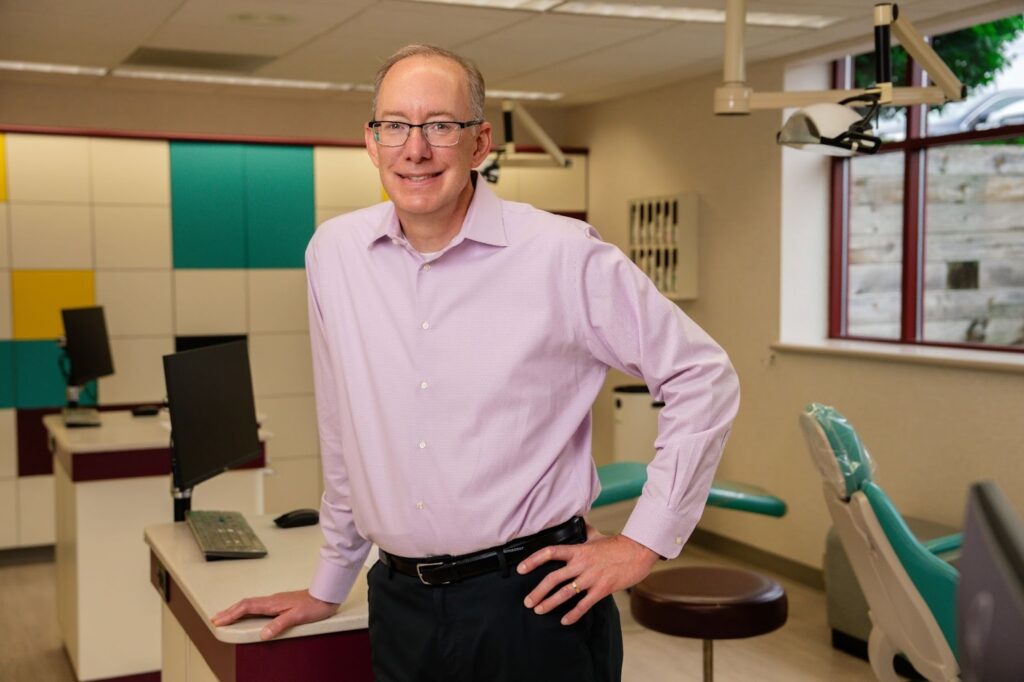
In Mequon, orthodontic care feels a little different when it is led by someone who understands the community. Dr. John Kittleson combines advanced technology with genuine care that puts patients at ease. From iTero digital scans to carefully customized treatment plans, precision meets comfort in every detail.
Families appreciate the thoughtful approach that keeps appointments efficient and communication clear. Our team handles insurance and payment questions directly so you know where you stand before treatment starts, and the friendly team makes each visit something to look forward to. For busy parents, teens, and professionals, the experience fits right into Mequon life.
It is this blend of expertise and warmth that keeps families coming back year after year, and it is why so many Mequon patients have moved to clear aligners.
Clear Aligner Technology Questions We Hear in Mequon
What is a digital scan and does it hurt?
A small wand passes over your teeth and builds a 3D model from thousands of images. Nothing goes in your mouth beyond the wand itself, there is no putty, and it takes a few minutes. Most people find it easier than a routine cleaning.
What are aligner attachments?
Small tooth-colored bumps bonded to certain teeth so the tray has something to grip. Smooth plastic slides over a rounded tooth without them, so attachments are what make rotations and other complex movements possible. They come off when treatment ends.
Why do new trays feel tight?
Each tray is made to the shape your teeth should be in at that stage, not the shape they are in now. That gap is the force moving your teeth. Tightness on day one and looseness by the end of the stage is exactly what should happen.
What is the difference between SureSmile and Invisalign?
Both are clear aligner systems built from a digital scan and a planned sequence of movements. The differences are in the software, the material, and the manufacturing. Which one suits you depends on your case, and we will tell you which we recommend and why.
What happens if a tooth does not move as planned?
It happens, and it is normal. We catch it at a check-in and adjust, which usually means a new scan and a revised sequence for the remaining stages. It is far easier to correct at stage six than at stage twenty, which is what the check-ins are for.
Come See the Tech in Action
The clearest way to understand any of this is to watch your own scan appear on the screen. It takes a few minutes and you will see exactly what we see. Book your free consultation and we will show you what your treatment would actually look like.